Beyond the Spreadsheet: Why Mid-Market Companies Are Betting Big on Analytics Infrastructure in 2025

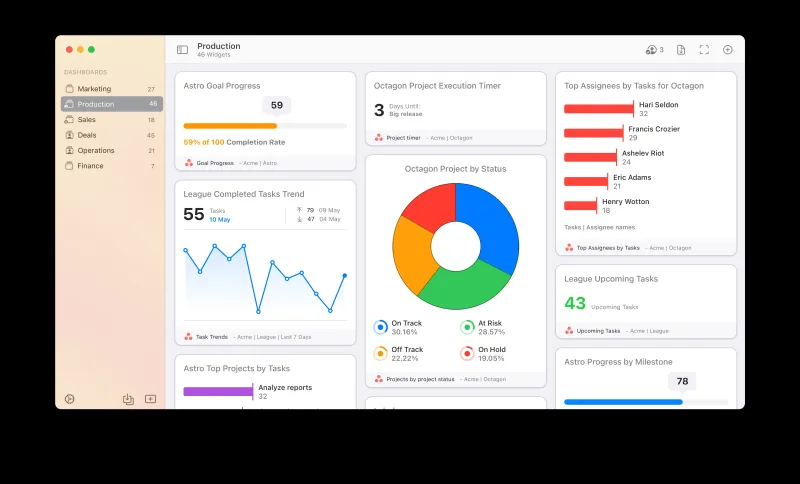
Photo: modern data analytics dashboard team meeting mid-market business, via networtiq.com
The Spreadsheet Was Never the Problem. The Scale Was.
Let's be honest about something the enterprise software industry rarely acknowledges: spreadsheets are remarkable tools. For a company generating $20 million in annual revenue, a well-maintained Excel workbook can absolutely serve as a functional reporting environment. The logic is sound, the barrier to entry is low, and nearly every business professional already knows how to use one.
The problem is not the spreadsheet. The problem is what happens when a company that built its analytical foundation on spreadsheets finds itself at $150 million in revenue, operating across multiple business units, serving customers through five distinct channels, and attempting to make quarterly strategic decisions in a market that moves faster than any monthly reporting cycle can capture.
This is the inflection point that defines the mid-market analytics challenge — and it is the moment that an increasing number of US companies are finally choosing to address head-on.
Why 2024 Was the Turning Point
Several forces converged in the post-2024 business environment to accelerate this shift. First, the cost of cloud-based data infrastructure dropped significantly, making modern data stacks financially accessible to companies that previously could not justify the investment. Tools that once required seven-figure implementations can now be deployed at a fraction of that cost, with substantially reduced IT overhead.
Second, the competitive pressure of operating in data-rich markets — where larger enterprise competitors have long held informational advantages — became impossible to ignore. Mid-market executives increasingly found themselves in board meetings and investor conversations where the inability to answer basic analytical questions in real time was a visible liability.
Third, and perhaps most importantly, the talent market shifted. A generation of analysts and data engineers trained on modern tooling — dbt, Snowflake, Looker, Fivetran — entered the workforce expecting to work with infrastructure that matched their skills. Mid-market companies clinging to legacy environments began losing analytical talent to organizations with more sophisticated data environments.
The Migration Challenge Nobody Warns You About
The decision to modernize analytics infrastructure is straightforward. The execution is considerably more complex. Mid-market companies face a distinctive set of migration challenges that differ meaningfully from those encountered by either small businesses or large enterprises.
Data consolidation is the first major obstacle. Years of operating with disconnected systems — a CRM that doesn't talk to the ERP, a marketing platform that exports only to CSV, a finance system maintained by a third-party provider with limited API access — means that the first phase of any infrastructure upgrade is fundamentally an integration project. Before any advanced analytics can be built, the data must be centralized, cleaned, and modeled.
Organizational change management is the second. Upgrading the technology is often simpler than changing how people use it. Finance teams that have built their quarterly routines around a specific Excel workbook are not immediately enthusiastic about learning a new business intelligence interface, regardless of how much more powerful it may be. Successful migrations invest as heavily in training and adoption as they do in the technical build.
The build-vs.-buy decision creates genuine paralysis for many organizations. Should the company invest in an internal data team capable of building and maintaining a custom analytics environment? Or should it partner with an external analytics provider and leverage pre-built solutions? There is no universal answer — but the companies that struggle most are those that attempt a hybrid approach without clearly defined responsibilities and governance.
Build vs. Buy: A Realistic Assessment
The in-house route offers maximum customization and, over a long enough horizon, potentially lower total cost of ownership. It also requires sustained investment in talent acquisition, retention, and tooling — costs that are easy to underestimate in the initial business case.
External solutions — whether managed analytics services, embedded BI platforms, or full-service data partnerships — offer faster time to value and predictable cost structures. The trade-off is typically some degree of customization and a dependency on the vendor's roadmap and support model.
For most mid-market companies, the pragmatic answer is a hybrid: a cloud-based data warehouse and transformation layer built and maintained internally (or with implementation support), paired with a managed analytics layer for reporting and decision support. This preserves flexibility at the data layer while accelerating the delivery of business-facing insights.
Four Companies That Got It Right
A regional healthcare services network with approximately $180M in revenue consolidated patient, billing, and operational data from seven disparate systems into a unified cloud data warehouse. Within six months of deployment, their operations team reduced the time required to produce monthly performance reports from eleven days to under four hours — freeing analyst capacity for proactive, forward-looking analysis rather than retrospective reporting.
A specialty food distribution company operating across the Southeast replaced a combination of spreadsheet-based inventory tracking and manual sales reporting with an integrated analytics environment. The ability to monitor inventory velocity and customer order patterns in near real time allowed them to reduce stockouts by 27% in the first year while simultaneously lowering carrying costs.
A professional services firm in the $75M revenue range implemented a standardized reporting framework across its seven practice areas for the first time in the company's history. Leadership gained a consistent view of utilization, pipeline, and margin by practice — enabling resource allocation decisions that had previously required weeks of manual data assembly to be made in a single leadership meeting.
A mid-sized e-commerce retailer invested in a customer data platform that unified purchase history, browsing behavior, and support interactions. The resulting segmentation capability allowed their marketing team to move from four broad audience segments to over forty dynamic cohorts — improving email campaign revenue attribution by 34% over two quarters.
What the Leaders Are Doing Differently
Across these examples and the broader mid-market landscape, several patterns distinguish the companies making meaningful progress from those still planning their first data warehouse migration.
They start with a defined business question, not a technology selection. The companies that succeed ask first: "What decisions do we need to make faster and more accurately?" The technology choices follow from that answer, not the reverse.
They secure executive sponsorship before the first line of code is written. Analytics infrastructure investments that lack a C-suite champion consistently stall during the organizational change phase, even when the technical implementation goes smoothly.
They measure adoption as rigorously as they measure build progress. A dashboard that no one uses is not an analytics asset — it is a sunk cost. Leading organizations track how frequently business users engage with new reporting tools and treat low adoption as a project risk requiring active intervention.
The Window Is Narrowing
The mid-market analytics opportunity is real — but so is the competitive consequence of delay. As more companies in the $50M–$500M revenue range complete their infrastructure transitions, the informational advantages currently available to early movers will erode. The organizations that act decisively now will enter the next business cycle with analytical capabilities that took their larger competitors a decade to develop.
The spreadsheet had a good run. It is time to build what comes next.