Fast Enough: The Case Against Buying Real-Time Analytics You Will Never Use

Photo: empty trading floor style operations room with glowing dashboards at night, via thumbs.dreamstime.com
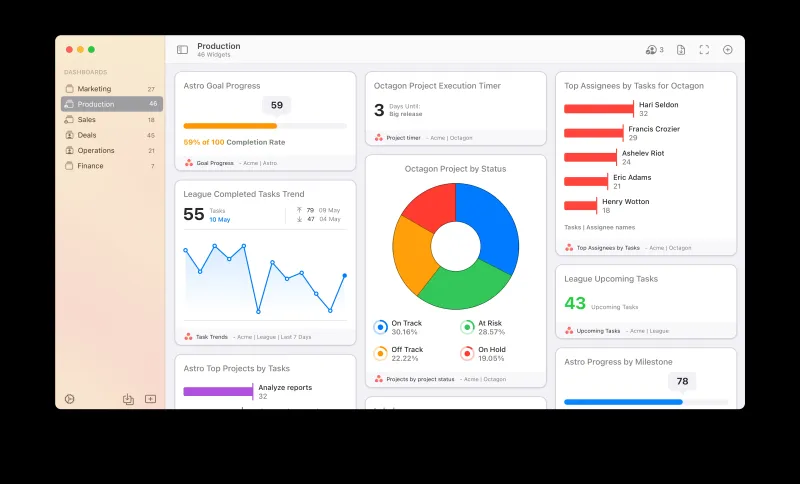
Somewhere in your industry, a competitor is demoing a real-time dashboard. Numbers pulse. Alerts fire. An operations center hums with the aesthetic of a trading floor. And somewhere in your own planning cycle, a voice asks why your organization is still making decisions on data that is, heaven forbid, four hours old.
Resist that voice. In our work with mid-market companies across the United States, we have reached an unfashionable conclusion: the pursuit of real-time analytics is, for most organizations, expensive theater. Not because speed lacks value — but because the value of speed is wildly concentrated in a handful of use cases, while its costs are distributed across your entire budget and your entire team's attention.
The Economics of Immediacy
Real-time capability is not a feature you add. It is an architectural commitment. Streaming ingestion, event-driven pipelines, infrastructure engineered for continuous availability — these carry meaningful premiums in software licensing, cloud spend, and above all, engineering talent, which commands a scarcity premium in every US labor market.
Now weigh that premium against a simple question: what decision, in your business, changes based on data that is sixty minutes old versus data that is four hours old? For a manufacturer monitoring a production line, the answer may be plenty. For a professional services firm, a regional retailer, or a B2B software company reviewing pipeline health, the honest answer is almost always nothing. The decision cadence of most mid-market businesses is daily at fastest, weekly typically. Building a real-time stack to serve a daily decision rhythm is like installing a Formula 1 pit crew for a commute to the grocery store.
Worse, real-time data creates a real-time anxiety. Executives conditioned to watch live numbers begin reacting to noise — a slow hour of web traffic, a single bad day in one region — and mistaking motion for progress. The most dangerous decisions in mid-market companies are rarely made too slowly. They are made too quickly, on incomplete signals, by people watching screens that update faster than their judgment does.
Where Speed Actually Pays
To be clear, there are genuine use cases, and they share a common signature: the cost of delayed response is high, immediate, and concrete.
Fraud and anomaly detection, where minutes of exposure translate directly into losses. Inventory and perishability management, where a stockout or spoilage event is unrecoverable. Equipment and system monitoring, where a failure cascades. Dynamic pricing in genuinely competitive, high-velocity markets. Clinical and safety contexts, where a lagging indicator is a liability issue.
If your business has one of these, invest in it — narrowly, deliberately, and only for that domain. The mistake is not investing in real-time; it is letting one legitimate use case justify a company-wide architecture. Build a fast lane for the two processes that need it. Let everything else travel at the speed of good judgment.
The Disciplined Alternative
For the majority of decisions, the superior model is not faster data. It is faster decisions on data reviewed at a disciplined cadence. We call this the 'fast enough' standard, and it has three components.
Match latency to cadence. If your operating review is weekly, data that is fresh as of the morning of the review is, by definition, real-time enough. Anything faster is waste. Audit each recurring decision in your company and write down the cadence; that number, not a vendor's benchmark, defines your latency requirement.
Invest the savings in quality. The money not spent on streaming infrastructure buys something with a higher return: data quality, metric definitions everyone trusts, and analysts who can explain what the numbers mean. A four-hour-old number that is correct beats a four-second-old number that is wrong in every scenario that matters.
Institutionalize the review. A weekly operating review with a fixed agenda, a trusted scorecard, and a norm of acting on what it shows will outperform a live dashboard nobody opens twice. Speed of data is a means. Speed of decision is the end. Confusing the two is how analytics budgets die quietly.
A Simple Diagnostic
Ask your leadership team three questions. First: name the last decision that would have changed if the data had arrived four hours sooner. If nobody can, you have your answer. Second: who currently acts on your most real-time data, and how often? If the alert queue routes to nobody with authority to respond, you have built an observation deck, not an operating capability. Third: what would you do with the 30% of analytics spend that a real-time migration would consume? If the answer is 'hire better analysts' or 'fix our definitions,' the contrarian path is also the profitable one.
The race toward real-time is real — for the companies that genuinely need it. For everyone else, the winning move is not keeping up. It is knowing, precisely, that you do not have to.